Best Open Source Vector Databases
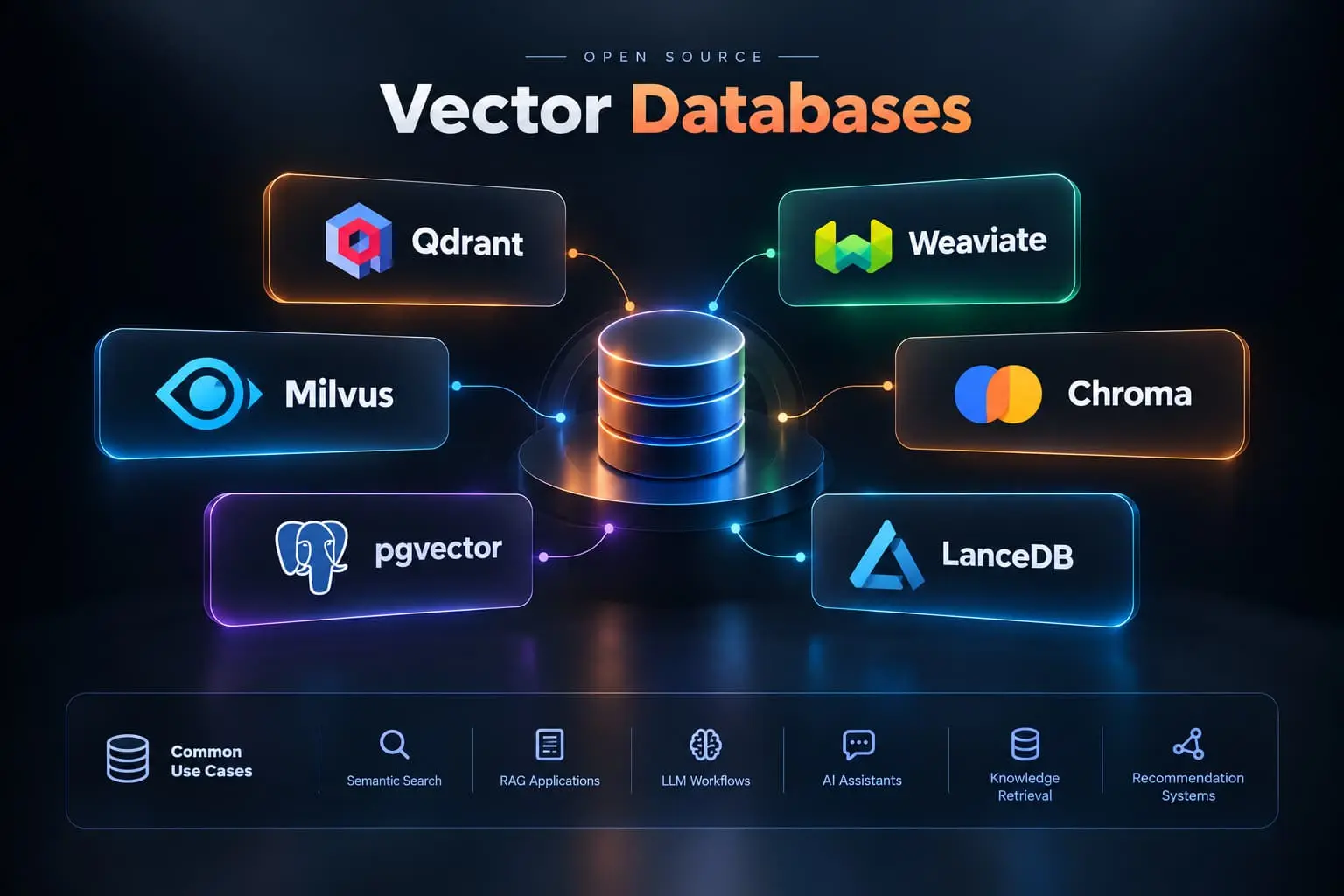
Vector databases have become essential for modern AI applications such as RAG systems, semantic search, and recommendation engines. While managed services exist, many developers prefer open-source solutions that offer greater control, lower costs, and flexibility for self-hosted or serverless environments.
Below are some of the strongest open-source vector databases available in 2026.
Qdrant
Qdrant is a high-performance vector database written in Rust. It is known for excellent query speed, efficient filtering, and relatively low resource consumption. It works well both as a self-hosted service and in serverless setups. Many teams choose Qdrant when performance and operational simplicity matter.
Weaviate
Weaviate stands out because of its strong hybrid search capabilities, combining vector similarity with traditional keyword search. It also offers solid multi-tenancy support and a GraphQL interface. It is a good option when your application needs more than pure vector retrieval.
Milvus
Milvus is designed for large-scale vector workloads. It can handle hundreds of millions to billions of vectors efficiently and is commonly deployed in production environments that require high scalability. It is a strong choice for teams expecting significant data growth.
Chroma
Chroma is one of the simplest vector databases to get started with. It is lightweight, developer-friendly, and works well for prototyping as well as smaller production workloads. Its ease of use makes it popular among teams building early-stage AI applications.
pgvector
pgvector is a PostgreSQL extension that adds vector search capabilities directly inside Postgres. If you already use PostgreSQL, this is often the most practical option because it avoids introducing an additional system. It works well for moderate-scale vector use cases.
LanceDB
LanceDB is a modern embedded vector database. It is particularly useful in serverless environments and applications that prefer an embedded approach rather than running a separate database server. It is lightweight and easy to integrate.
Elasticsearch
Elasticsearch remains a heavier but capable option. While it supports vector search, it is more resource-intensive and operationally complex compared to purpose-built vector databases. It is best considered when you already rely on Elasticsearch for full-text search and want to add vector capabilities on top.
Conclusion
Choosing the right vector database depends on your scale, performance needs, and operational preferences. Qdrant and Weaviate currently stand out for most production use cases, while Chroma and pgvector remain excellent starting points for simpler or existing PostgreSQL-based systems. Milvus is the preferred option when extreme scale is required.